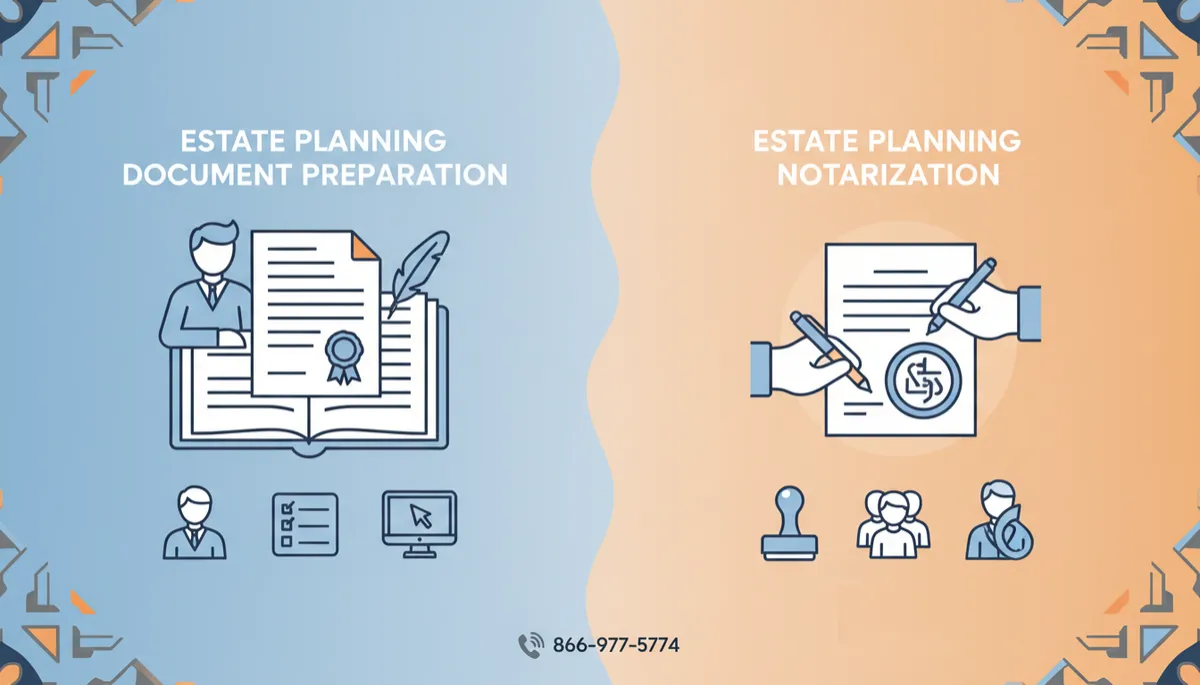
Estate Planning: Document Prep vs. Notarization
Estate Planning, Notary Services, Florida Estate Documents
Estate Planning Document Preparation vs. Estate Planning Notarization: What's the Difference?
When you begin creating a will, trust, or other Florida estate documents, you will quickly see two separate services: estate planning document preparation and estate document notarization. Although they often happen in the same appointment, they are not the same thing. Understanding the different roles of document preparers, attorneys, notaries, witnesses, and signers can help you plan confidently and avoid costly mistakes.
Why Estate Planning Involves Multiple Roles
Estate planning touches your property, your family, and your medical wishes. Because these decisions are so important, the law often requires multiple layers of protection to help ensure that your documents are valid and trustworthy. That is why you may interact with:
A person or service that prepares the documents
An attorney (if you choose to work with one for legal advice)
A commissioned estate planning notary
One or more witnesses
You, the signer (and sometimes other signers such as agents or trustees)
Each role exists for a different reason. The person who prepares your documents focuses on the content. The notary focuses on your identity and the act of signing. Witnesses observe the signing. And you, as the signer, are the person whose wishes are being recorded. These are separate steps, even if they take place in a single sitting.
What Is Estate Planning Document Preparation?
Estate planning document preparation is the process of drafting and organizing the paperwork that expresses your wishes. In Florida, this may include:
Last Will and Testament
Revocable living trust or other trust agreements
Durable power of attorney
Health care surrogate designation and living will
Deeds and transfer-on-death directions, where appropriate
Document preparation can be done in different ways. Some consumers use online forms or templates, some work with non-attorney document preparation services, and others hire a licensed attorney. No matter which route you choose, the key purpose of document preparation is to get your wishes down in writing in a clear, organized way.
📌 Key Takeaway: Document preparation is about the words on the page—what your Florida estate documents actually say and how they are structured.
The Role of Attorneys in Document Preparation
A licensed attorney can provide legal advice about your specific situation, explain Florida law, and customize your estate plan to your goals. Attorneys may:
Analyze your assets, family situation, and beneficiary designations
Recommend which documents you may need and how they should work together
Draft customized language to address special needs, blended families, or business interests
Answer legal questions and advise you on potential risks and options
Not every document preparer is an attorney. Many non-attorney services can help you type, organize, or format documents based on your instructions, but they cannot provide individualized legal advice. This article is for general information only and is not a substitute for speaking with a qualified lawyer about your own situation.
What Is Estate Planning Notarization?
Estate document notarization is a different service from preparation. When you work with an estate planning notary, the focus shifts from what the document says to who is signing it and how. A notary public is a state-appointed official who:
Verifies the identity of the signer using acceptable identification
Confirms that the signer appears willing and aware—not under obvious duress or confusion
Administers an oath or acknowledgment, depending on the type of document
Watches the signer sign, or confirms that the signature is genuine
Completes a notarial certificate and applies an official stamp or seal
In Florida, many estate planning documents, such as deeds, powers of attorney, and certain affidavits, typically require notarization. A notarized signature helps future courts, financial institutions, and third parties trust that the document was truly signed by the person named in it.
💡 Pro Tip: A notary generally does not review your estate plan for accuracy or give legal advice. Their role is to verify identity and the act of signing—not to draft or interpret your Florida estate documents.
The Separate Roles of Witnesses and Signers
Who Are the Signers?
The signer is the person whose decisions are being recorded in the document. In estate planning, this is usually:
The person making a will (often called the testator)
The person creating a trust (the grantor or settlor)
The individual granting power of attorney (the principal)
Sometimes, additional people also sign, such as agents, trustees, or guardians acknowledging their responsibilities. Regardless of the document, the signer is the one whose intent matters most. That is why the law requires notaries and witnesses to pay close attention to the signer’s identity, apparent capacity, and willingness to sign.
What Do Witnesses Do?
In many Florida estate documents, witnesses are just as important as the notary. A witness is a neutral person who:
Observes the signer sign the document (or acknowledges a prior signature)
Signs the document themselves, confirming what they saw
Florida law may have specific rules about how many witnesses are required and who may serve as a witness for certain documents, such as wills or health care directives. Witnesses help future courts or family members feel confident that the signer actually signed the document and appeared to do so voluntarily.

Proper witnesses and notarization can strengthen the validity of Florida estate documents.
Document Preparation vs. Notarization: Why They Are Separate Services
It is common to schedule one appointment and expect everything to be handled at once. However, it helps to think of estate planning as involving two distinct phases:
Phase 1 – Document Preparation: Creating, reviewing, and finalizing the written terms of your plan.
Phase 2 – Execution and Notarization: Signing the documents in front of the required notary and witnesses.
These two phases are separate for good reasons:
Different skills: Drafting a clear will or trust requires knowledge of language and law. Notarizing a signature requires training in identification, recordkeeping, and notarial procedures.
Different responsibilities: A document preparer or attorney is responsible for what the document says. A notary is responsible for verifying the signer’s identity and the formalities of signing—not the legal content of the document.
Different timing: You may revise drafts several times before you are ready to sign. Notarization usually happens only once, when you are confident the document is final.
📌 Key Takeaway: Having your estate planning document prepared does not automatically mean it is notarized, and having a signature notarized does not guarantee the document was properly drafted.
Common Misunderstandings About Estate Planning Notaries
Many people assume that if a notary is involved, everything in the document must be legally correct. In reality, the notary’s role is limited and specific. Here are a few frequent misunderstandings:
“The notary checked my whole estate plan.” In most cases, the notary only confirms who signed and when—not whether your plan is complete or appropriate for your goals.
“If it’s notarized, it must follow Florida law.” A notary does not typically review statutes or guarantee that your document meets every legal requirement. That is a legal question, not a notarial one.
“The notary can tell me what to change.” Unless the notary is also a licensed attorney and is acting in that capacity, they usually cannot provide individualized legal advice about your estate planning choices.
Understanding these limits helps you see why estate planning document preparation and estate document notarization are billed and treated as separate services, even when they happen at the same office or during the same visit.
How These Roles Work Together for Florida Estate Documents
For Florida residents, the best results usually come when each role is respected and coordinated. A typical sequence might look like this:
You gather information about your assets, beneficiaries, and goals.
A document preparer or attorney drafts your Florida estate documents based on your instructions and, if applicable, legal guidance.
You review the drafts carefully and request any changes needed before signing.
Once you are satisfied with the content, you schedule a signing appointment with an estate planning notary and the required witnesses.
At the appointment, the notary verifies identity and oversees the signing, and witnesses observe and sign where required.
Afterward, you store your completed, signed, and notarized documents in a safe place and share copies with trusted individuals, such as your personal representative, agent, or trustee.
FAQs About Estate Planning Document Preparation and Notarization
Do all Florida estate documents have to be notarized?
Not every document is treated the same way. Some Florida estate documents require both witnesses and a notary, some require only witnesses, and others may not require notarization at all. However, even when notarization is not strictly required, many people choose to have documents notarized to make them easier to accept by banks, title companies, and other institutions. Because requirements can be technical and may change, it is wise to confirm the rules that apply to your specific documents with a qualified professional.
Can a notary prepare my estate planning documents for me?
Some notaries also offer document preparation services, and some are licensed attorneys. Others are not. In many situations, a notary who is not an attorney is limited to typing or filling in information that you provide, without offering legal advice or choosing which forms you should use. Always ask how the service is structured and whether any legal advice is being provided. If you want legal guidance about your estate plan, you may wish to consult with a Florida attorney.
If my will is notarized, is it automatically valid?
A notarized will may be easier to prove in court, but notarization alone does not guarantee that the will meets every legal requirement or that it reflects your true wishes. The content of the document, how it was prepared, whether the correct number of witnesses were present, and other factors can all matter. Notarization is an important step, but it is only one part of creating a reliable estate plan.
Do witnesses and notaries need to read my whole estate plan?
In many cases, witnesses and notaries do not need to read every paragraph of your documents. Their primary responsibilities are to observe the signing, verify identity (for the notary), and confirm that the signer appears willing and aware. That said, they must still be comfortable that the document is complete and that they are signing the correct pages. If you have privacy concerns, you can discuss with your preparer or attorney how to manage the signing process while respecting your confidentiality.
Can I use online templates for my Florida estate documents and then just find a notary?
Many people start with online templates or document kits, then bring the completed documents to a notary for signing. This can be a cost-conscious approach, but it does not replace individualized legal advice. If you choose this route, remember that the notary is there to verify your identity and signature—not to review whether the template is right for your situation or consistent with Florida law. If you have questions about whether your plan is appropriate, you may want to speak with an attorney before signing.
Taking Your Next Step in the Estate Planning Process
Whether you are just beginning to think about a will or you already have drafts in hand, understanding the distinction between estate planning document preparation and estate planning notarization can help you move forward with confidence. Preparation shapes what your Florida estate documents say. Notarization and witnessing help confirm who signed and how they signed.
When these pieces come together, you gain more than a stack of papers—you gain a clearer path for your loved ones to follow in the future. Thoughtful planning today can reduce confusion, stress, and conflict later on.
📌 Ready to schedule your signing? If you are looking for help coordinating estate document notarization and witnesses after your documents are prepared, you can call 866-977-5774 to learn more about available services and scheduling options.
For additional background on related topics, you may also want to explore resources on choosing a personal representative, organizing important records for your family, and reviewing your estate plan after major life events. Taking these steps can help your Florida estate documents stay current and effective over time.
This article provides general information to help you understand the different roles of document preparers, attorneys, notaries, witnesses, and signers. It is not legal advice. If you have questions about your specific situation, consider consulting with a qualified Florida estate planning attorney who can review your circumstances and help you design a plan tailored to your needs.