Notarization in Estate Planning: Essential Documents
Estate Planning, Notarization, Estate Planning Notary, Estate Document Notarization
What Estate Planning Documents May Require Notarization?
Estate planning can feel overwhelming, especially when you start hearing about notarization, witnesses, and different types of legal documents. Understanding when and why estate documents may need notarization can help you approach the process with more confidence and fewer surprises. This guide explains how notarization fits into estate planning, which documents commonly involve a notary, and what to expect when you schedule an estate planning notarization appointment in Florida or elsewhere.
The Role Notarization Plays in Estate Planning
Notarization is a formal process where a commissioned notary public verifies the identity of the person signing a document, confirms that they are signing willingly, and completes a notarial certificate. The notary’s seal and signature add an extra layer of authenticity and help prevent fraud. In the context of estate document notarization, this can be especially important because these documents often deal with sensitive topics like medical decisions, financial authority, and distribution of assets after death.
Many states, including Florida, have specific rules about which estate planning documents must be notarized, which must be witnessed, and which may require both. Even when notarization is not strictly required by law, some people choose to notarize documents anyway to reduce the risk of challenges later. A properly executed and notarized document is more likely to be accepted by banks, medical providers, and courts without delay or extra questions.
📌 Key Takeaway: Notarization helps prove that the person who signed an estate planning document is who they say they are and that they signed the document voluntarily and knowingly.
Common Estate Planning Documents That May Involve a Notary
Estate planning is not just about a will. Many related documents can benefit from, or legally require, notarization. Requirements vary by state, so it is important to check your local laws or speak with a qualified attorney. Below are some of the most commonly encountered documents where an estate planning notary may be involved.
Powers of Attorney
A power of attorney (POA) allows you (the “principal”) to authorize another person (the “agent” or “attorney-in-fact”) to act on your behalf. In estate planning, two types are especially common:
Durable financial power of attorney: Authorizes someone to handle financial and property matters, such as paying bills, managing investments, or selling real estate.
Limited or special power of attorney: Grants authority for a specific task or time period, such as closing on a home while you are out of town.
Many financial institutions and title companies strongly prefer, or require, that powers of attorney be notarized. In states like Florida, notarization is typically required for certain POAs to be effective, especially if they involve real estate. Having your POA notarized can help ensure that banks and other third parties accept it without hesitation when it is needed most.
Trust Documents and Certifications of Trust
A trust is a legal arrangement where a trustee holds and manages assets for the benefit of one or more beneficiaries. The main document that creates the trust is often called a trust agreement or declaration of trust. While specific requirements vary, it is common practice for the trust creator (the “grantor” or “settlor”) to sign the trust document in front of a notary public. This can make it easier to prove the trust’s validity later and to transfer assets into the trust’s name.
In addition to the full trust instrument, you may encounter a certification of trust (sometimes called an abstract or certificate of trust). This shorter document summarizes key information—such as the trustee’s authority—without revealing all of the trust’s details. Financial institutions and title companies often request a notarized certification of trust when you open accounts or transfer property into the trust. A notary for estate documents can help ensure that these certifications are executed correctly so your transactions move forward smoothly.
Advance Directives and Health Care Documents
Advance directives allow you to express your medical preferences in case you cannot speak for yourself. Common documents include:
Health care surrogate designation or medical power of attorney: Names someone to make health care decisions for you if you are unable to do so.
Living will: Outlines your wishes regarding life-prolonging treatments, resuscitation, and end-of-life care.
Some states allow these documents to be executed either with witnesses, with a notary, or with both. For estate planning notarization in Florida, for example, there are specific formalities around health care directives and living wills. Even where notarization is optional, people often choose to notarize these documents so hospitals and medical professionals can be more confident they are dealing with an authentic, properly executed directive.
Affidavits Related to Estates
An affidavit is a written statement of facts that the signer swears or affirms are true. Affidavits are widely used in estate matters, including:
Affidavit of heirship: Used to identify a deceased person’s heirs, often when there is no formal probate or when real property is being transferred.
Affidavit of domicile: Confirms where a deceased person lived, which can affect which state’s laws apply to their estate or taxes.
Small estate affidavits: In some jurisdictions, used to collect certain assets without a full probate proceeding when the estate is below a threshold amount.
Affidavits almost always require notarization because the notary is administering an oath or affirmation and certifying that the statement was sworn to before them. When you schedule an estate planning notary appointment for an affidavit, expect the notary to verify your identity and ask whether you swear or affirm that the contents of the affidavit are true.
Other Related Estate Documents
Depending on your situation and your attorney’s guidance, you may encounter other documents that involve notarization, such as:
Deeds transferring real estate into or out of a trust
Beneficiary designations or change forms that a financial institution requests be notarized
Releases, consents, or waivers signed by heirs or beneficiaries
Again, the exact requirements depend on state law and the policies of the organizations involved. A notary for estate documents can help ensure that signatures are properly notarized so the documents are more readily accepted.
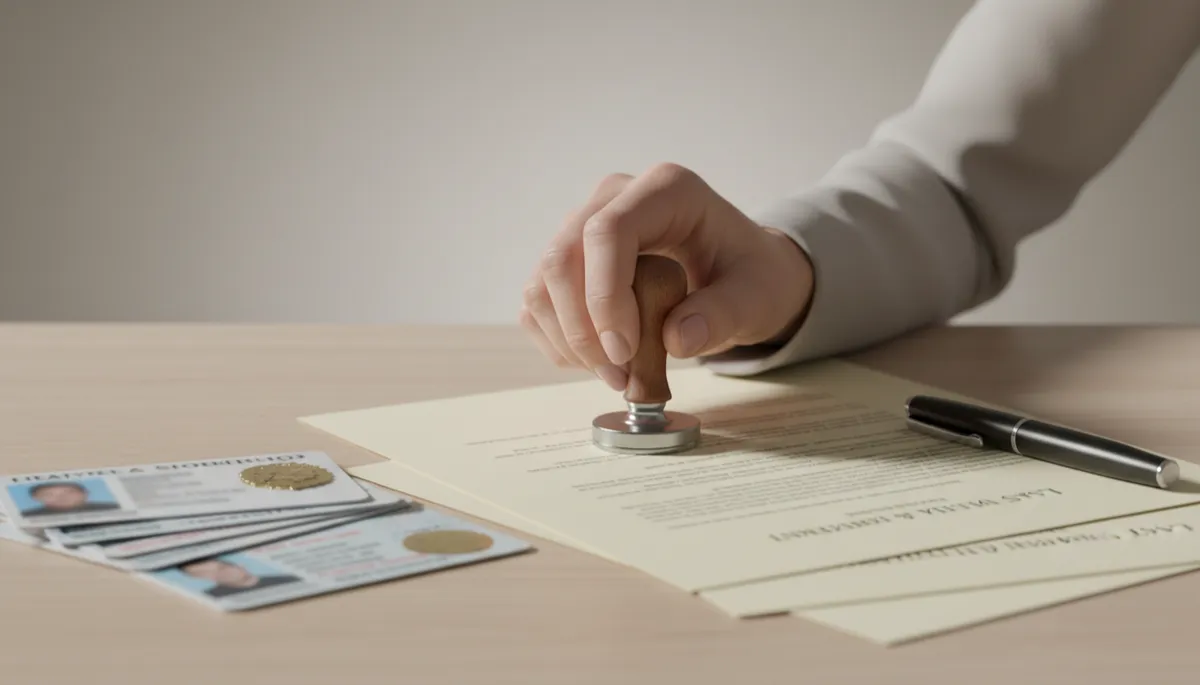
A clear notarial seal and certificate help estate documents stand up to scrutiny.
How a Notary’s Role Differs from an Attorney’s Role
It is important to understand that a notary public is not the same as an attorney. Their roles in estate planning are distinct and complementary, but they are not interchangeable.
What a Notary Can Do
Verify identity using acceptable identification documents
Confirm that the signer appears willing and aware (not under duress or visibly confused)
Administer oaths or affirmations for affidavits and sworn statements
Witness signatures and complete the notarial certificate with their seal
The notary’s focus is on the signing process, not the content of the document. They are there to deter fraud and ensure proper execution, not to advise you on whether the document is appropriate for your situation.
What an Attorney Can Do
Provide legal advice tailored to your specific circumstances
Draft estate planning documents such as wills, trusts, and powers of attorney
Explain legal options and potential consequences of different strategies
Represent you in court or in dealings with other parties regarding your estate plan
Many attorneys are also notaries, and some law firms coordinate the signing and notarization of estate documents in-house. However, if you are working with documents prepared elsewhere, you may turn to an independent estate planning notary or a dedicated service such as Seamless Signature Solutions to handle the notarization portion only. In that case, the notary will not review the document for legal accuracy or tell you what to sign; they will simply perform the notarial act requested.
⚠️ Important: Notaries cannot give you legal advice, interpret your estate plan, or tell you which documents you should have. For that guidance, you must consult a licensed attorney in your state.
Preparing for an Estate Planning Notarization Appointment
Whether you visit a notary in person, schedule a mobile notary, or use remote online notarization (RON) where allowed, a little preparation can make your appointment faster and smoother. Here is what clients typically should have ready for an estate document notarization session.
1. Your Documents Filled Out, but Unsigned
In most cases, you should complete all blanks in your documents before the appointment, but wait to sign them until you are in front of the notary (or, for RON, until you are in the live online session). The notary must witness the actual signing to complete the notarization. If you are unsure how to fill out the document, contact the person or organization that prepared it or consult an attorney; the notary cannot tell you what to write.
2. Acceptable Identification
You will need valid, government-issued photo identification, such as a driver’s license, state ID card, passport, or other ID accepted in your state. The name on your ID should reasonably match the name on your documents. For example, if your legal name includes a middle initial, your documents should typically reflect that. If your identification is expired or does not match, contact the notary service ahead of time to see what alternatives may be acceptable under state law.
3. Required Witnesses (If Any)
Some estate planning documents require witnesses in addition to notarization. For example, certain powers of attorney or health care directives may call for one or two adult witnesses who are not named in the document and who are not related to you. Requirements vary widely, so review your documents ahead of time to see if witnesses are needed and whether there are restrictions on who can serve as a witness.
Some notaries or services can help arrange witnesses for an additional fee, while others require you to bring your own. If you are using a mobile notary or remote online notarization through a provider like Seamless Signature Solutions, ask in advance whether they can supply witnesses or if you must coordinate them yourself. Planning for witnesses ahead of time helps avoid last-minute delays when you are ready to sign.
4. Clear Instructions from the Document Preparer
If an attorney or financial institution prepared your documents, they may have provided specific signing instructions. Bring those instructions with you. They may indicate where you need to sign, whether your initials are required on certain pages, and whether multiple copies must be executed. While the notary focuses on the notarial act, having clear instructions helps ensure that your estate planning package is completed in the way the preparer intended.
5. Enough Time and a Calm Environment
Estate planning documents are significant, and rushing through them can be stressful. Allow enough time for the notary to verify identification, confirm your understanding, and complete all notarial certificates. If you are using a mobile or remote notary, choose a quiet, well-lit space where you can focus on the signing without interruptions. This helps the notary confirm that you are signing willingly and that the process is properly documented.
Why Witnesses May Be Separate from the Notary
People are sometimes surprised to learn that a notary and a witness are not the same thing. A notary’s primary role is to perform the notarial act, while a witness’s role is to observe the signing and, in some cases, to attest that the signer appeared to be of sound mind and acting voluntarily. In many situations, the same person can serve as both notary and witness, but there are important exceptions and practical reasons to keep the roles separate.
Legal and Ethical Restrictions
Some states or specific document types restrict who may serve as a witness. For example, witnesses may need to be disinterested adults who are not named as agents, beneficiaries, or heirs. In certain cases, a notary who has a personal interest in the document may not be allowed to notarize it. To avoid any appearance of conflict of interest, a notary may decline to act as a witness even if technically allowed, and separate witnesses may be used instead.
Practical Reasons to Use Separate Witnesses
In a busy signing, the notary is focused on verifying identity, completing journal entries (where required), and filling out the notarial certificate correctly. Having separate witnesses helps ensure that each role is carried out carefully. For remote online notarization, technology platforms sometimes provide independent witnesses who join the session virtually, further separating the roles and documenting who was present for the signing.
Ultimately, the goal is to create an estate planning record that will stand up to scrutiny if questions arise later. Clear separation of responsibilities between the notary and any witnesses can support that goal and reduce the risk of challenges to the document’s validity.
In-Person, Mobile, and Remote Online Notarization for Estate Documents
Today, you are not limited to visiting a traditional office for estate planning notarization. Depending on your state, you may be able to choose from:
In-person notarization: You meet the notary at a physical location such as an office, bank, or shipping center.
Mobile notarization: A notary travels to your home, office, care facility, or another convenient location—especially helpful for clients with mobility or transportation challenges.
Remote online notarization (RON): Where permitted by law, you connect with a commissioned online notary through secure audio-video technology, sign electronically, and receive an electronically notarized document.
Services like Seamless Signature Solutions offer dedicated estate planning notarization support, including estate-planning notarization services and mobile and remote online notarization (RON) options where allowed. This flexibility can make it easier to coordinate signings with multiple family members, attorneys, and witnesses, even when everyone is in different locations or has demanding schedules.
Frequently Asked Questions About Estate Planning Notarization
1. Does every estate planning document have to be notarized?
Not necessarily. Some documents may only require witnesses, while others may require both witnesses and notarization. For example, in some states a will may be valid with only witnesses, but a separate self-proving affidavit attached to the will is notarized to simplify probate. Other documents, such as powers of attorney or affidavits, are often required by law or by third parties to be notarized. Because requirements vary by state and by document type, it is important to review the instructions that came with your forms or consult an attorney for guidance specific to your situation.
2. Can I use remote online notarization for estate planning documents in Florida?
Florida is one of the states that has authorized remote online notarization, subject to specific rules. Some estate planning documents may be eligible for RON, while others may have additional requirements or limitations. For instance, there can be special rules about vulnerable adults or about certain types of wills or testamentary documents. If you are interested in estate planning notarization in Florida using RON, review Florida’s current statutes and consult with a Florida-licensed attorney about which of your documents are suitable for remote notarization. A provider like Seamless Signature Solutions can then help you complete the online notarization process in compliance with Florida law.
3. Can a notary explain my documents or tell me if they are correct?
No. A notary’s role is limited to verifying identity, witnessing signatures, and completing the notarial certificate. They do not review the document for legal sufficiency, and they cannot advise you about whether the document is appropriate, complete, or in your best interest. If you have questions about what a clause means, whether a power of attorney is too broad, or how a trust will operate, those are legal questions that must be addressed by an attorney, not by the notary.
4. Do my witnesses need to show identification to the notary?
In many cases, yes. If witnesses are part of the notarization—for example, in a notarized will or power of attorney—the notary may need to record their information and verify that they meet the legal requirements (such as being adults and not named in the document). Requirements can vary by state and by type of document. When you schedule your appointment, ask the notary or service what your witnesses should bring. As a practical matter, it is wise for witnesses to bring government-issued photo identification, even if it is not strictly required, so that the notary can confidently document who was present.
5. What if I cannot travel to a notary’s office?
If traveling is difficult due to health, transportation, or scheduling challenges, you may have options. Many providers offer mobile notarization, where a notary travels to your home, hospital, care facility, or other convenient location. Where permitted by law, remote online notarization allows you to connect with a notary by video from your computer or smartphone. Seamless Signature Solutions offers both mobile and RON services for estate documents in eligible areas, helping you complete important signings without leaving your current location. Always confirm that the type of notarization you choose is allowed for your specific documents and jurisdiction.
Moving Forward with Confidence
Estate planning can be an emotional and detail-heavy process, but understanding where notarization fits in can make each step more manageable. Notarization helps confirm the authenticity of your signatures and can make it easier for banks, medical providers, and courts to rely on your documents when the time comes. From powers of attorney and trust certifications to advance directives and affidavits, an experienced estate planning notary plays a focused, procedural role that supports the legal work done by your attorney.
When you are ready to execute your estate planning documents, take time to review any instructions from your attorney, gather proper identification, and confirm whether witnesses are required. If you prefer the convenience of meeting at your home, office, or online, consider working with a provider like Seamless Signature Solutions, which offers dedicated estate-planning notarization along with mobile and remote online notarization services where permitted by law. With the right preparation and support, you can complete your estate document notarization in a way that is organized, efficient, and designed to withstand future scrutiny.
To learn more or to schedule an appointment, call Seamless Signature Solutions at 866-977-5774.