Florida Apostille Processing Time Guide
Legalization, Apostille Florida, Processing Time
How Long Does It Take to Get an Apostille in Florida?
If you need to use a Florida document in another country, you will usually be asked for an apostille. One of the first questions people ask is, “How long does an apostille take in Florida?” The honest answer is: it depends. Florida apostille processing time can change based on many moving parts, and official time frames may be updated by state and federal agencies at any time. Always confirm the latest processing information directly with the appropriate government office before you submit your documents.
Why Florida Apostille Processing Time Varies
There is no single, guaranteed answer to how long it takes to get an apostille in Florida. The timeline is shaped by several factors working together: the type of document, government processing backlogs, the submission method you choose, whether any corrections are needed, extra authentication requirements, the destination country, and shipping or courier logistics. Understanding each of these helps you set realistic expectations and avoid unnecessary delays.
1. Document Type: A Key Driver of Apostille Timing
Not all documents follow the same path to an apostille. The document type often determines which office must sign or certify it before the Florida Department of State can issue the apostille. This step alone can significantly influence how long apostille processing takes in Florida.
Vital records (birth, death, marriage, divorce) usually need to be issued by the Florida Department of Health or the clerk of court and may need to be “long-form” or recently issued, depending on the destination country’s rules.
Court documents (judgments, name changes, adoption orders) must typically be certified by the clerk of the court where the order was entered before the state can apostille them.
Notarized documents (powers of attorney, letters of consent, affidavits) must be properly notarized by a Florida notary, often with specific wording and a legible seal, before the apostille request is accepted.
Educational records (transcripts, diplomas, enrollment letters) may have to be certified by the school or school district and sometimes notarized by a designated official before they can be apostilled.
Each of these preliminary steps takes time. If you are on a tight schedule, start by confirming exactly what version of the document your destination country requires and whether additional certifications are needed before the Florida apostille can be issued. When in doubt, verify with the receiving authority or consulate, as their rules can change without notice.
2. Government Processing: Workloads, Backlogs, and Holidays
Once your documents are properly prepared, they still need to move through one or more government offices. Florida apostille processing time can vary based on:
Current workload and staffing at the Florida Department of State and any local agencies involved.
Seasonal surges, such as back-to-school periods, immigration deadlines, or peak travel seasons, when more people request apostilles at the same time.
State and federal holidays, which can pause processing and add days to your overall timeline.
Official turnaround estimates are usually published by the Florida Department of State, but they can change quickly when volume spikes. To understand how long an apostille may take at any given moment, review the most recent information on the Department of State’s website or call their office. If your timing is critical, confirm again shortly before you submit your documents, as posted estimates are not guarantees.
3. Submission Method: Mail, In-Person, or Apostille Service
How you submit your documents for apostille in Florida can have a major impact on your overall timeline. Different submission methods involve different transit times, internal workflows, and opportunities for error correction.
Mailing Your Documents Directly
Many people mail their documents to the Florida Department of State. This can be convenient, but it adds mailing time on the way there and back. Postal delays, misrouting, or incomplete tracking can all stretch your total wait. If you choose this route, consider using a trackable, reliable shipping method and build extra time into your schedule for unexpected postal issues.
In-Person Submission (Where Available)
In some situations, documents can be delivered in person to the state office. This can reduce mailing delays, but it may require travel, time off work, and waiting in line. Availability of in-person services and any same-day or counter options can change, so always confirm the current policy on the Florida Department of State’s website before making plans.
Using an Apostille Service or Facilitator
A professional apostille service can help streamline the process. While no private company can control state processing speed, experienced facilitators know how to prepare documents correctly, choose the most effective submission method, and monitor your file. For expedited apostille Florida handling within what the law allows, an established service can often reduce avoidable delays and help you avoid costly mistakes that send your documents back to square one.
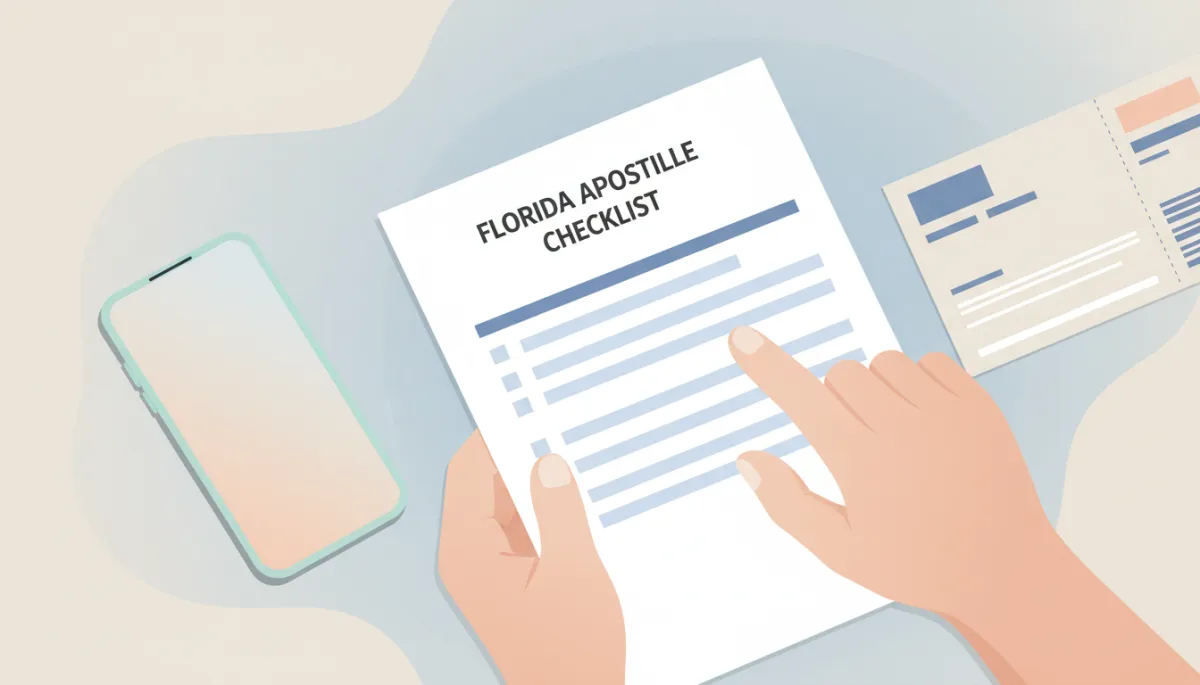
Careful pre-checks and the right submission method can prevent weeks of avoidable delays.
4. Corrections: Small Errors, Big Delays
One of the most common reasons Florida apostille processing time stretches out is the need for corrections. If your documents do not meet the exact requirements, they may be rejected or returned for changes, adding days or even weeks to your schedule. Common issues include:
Missing or incomplete notarization (no notary seal, missing signature, or incorrect notarial wording).
Using an uncertified or unofficial copy of a vital record instead of a certified copy.
Names that do not match exactly between the document and your identification or other paperwork required by the destination country.
Documents issued from the wrong jurisdiction (for example, a non-Florida document submitted to Florida for apostille).
Every correction means re-doing a step, resending documents, and waiting again. Before you submit anything for an apostille in Florida, review the requirements carefully or have a professional look over your paperwork to catch issues early. Because requirements can change, always verify the most current instructions on the Florida Department of State website or with a knowledgeable apostille facilitator.
5. Additional Authentication Requirements
In many cases, a Florida apostille is the final step. However, some situations involve extra levels of authentication that can extend your timeline. For example:
Certain documents may need to be certified by a county clerk or state agency before they can be apostilled by the Florida Department of State.
For non-Hague Convention countries, you may need authentication plus consular legalization instead of a simple apostille, which often involves the U.S. Department of State and a foreign consulate.
Each extra step adds its own processing time and shipping. To avoid surprises, confirm whether your destination country is part of the Hague Apostille Convention and ask the receiving authority exactly what they require. If you are unsure, an apostille service familiar with Florida and international rules can help map out the full path so you understand how long the entire process is likely to take, subject to current government timelines.
6. Destination Country Requirements and Preferences
The country where you will use your document plays a major role in your Florida apostille journey. Different countries have different expectations about:
How recent the document must be (some want vital records issued within the last few months).
Whether translations are required, and if so, whether the translation must be certified or notarized in a specific way.
Whether they accept notarized copies or insist on original documents only.
If these requirements are not met, your document may be rejected even if the Florida apostille itself is valid, forcing you to start over. Before you begin, contact the foreign school, employer, court, or consulate that requested the documents and ask for their current written requirements. Because international rules can change, revisit their instructions if any time has passed since you first received them.
7. Shipping and Courier Logistics
Even after your Florida apostille is issued, you are still relying on shipping to move the documents where they need to go. Shipping can affect timing at three different stages:
Delivery of your documents to the Florida Department of State or to any preliminary agencies.
Return shipping from the state (or from your apostille service) back to you or to a designated recipient.
Final international shipping to the destination country, if the documents need to be physically delivered abroad.
Weather events, customs inspections, routing errors, and carrier backlogs can all slow things down. To protect your timeline, use trackable shipping, keep copies of everything, and plan for contingencies. If your deadline is strict, consider faster courier options and confirm estimated delivery times directly with the carrier, understanding that these are estimates, not guarantees.
Common Causes of Apostille Delays in Florida
When people search for “Florida apostille processing time,” they are often trying to figure out why their documents are taking longer than expected. While every case is different, some delay patterns show up again and again:
Incomplete applications – missing payment, incorrect fee amounts, or unsigned request forms can cause your package to be set aside or returned.
Incorrect document format – sending short-form certificates when the destination requires long-form, or sending photocopies when originals are needed.
Outdated information – relying on old processing times or requirements found online, instead of checking the most recent guidance from the Florida Department of State or the receiving authority.
Unclear destination requirements – not clarifying exactly what the foreign school, employer, or court wants, leading to rejections after the apostille is already attached.
Shipping issues – lost packages, incorrect addresses, or delays with the postal service or courier.
While you cannot control everything, you can dramatically reduce the likelihood of these problems by preparing carefully and verifying current requirements from reliable sources before you act.
How to Prepare Correctly Before Submitting Documents
Good preparation is the most effective way to keep your Florida apostille processing time as predictable as possible. Here are practical steps you can take before you submit anything:
1. Confirm Exactly What the Destination Requires
Ask the foreign authority for a current, written list of requirements. Clarify:
Which documents are needed, and in what format (originals, certified copies, notarized copies).
Whether they require translations and, if so, what type of translator or certification is acceptable.
Any age limits on documents (for example, issued within the last 90 days).
2. Review Florida Apostille Instructions from Official Sources
Before you mail or deliver anything, read the latest instructions on the Florida Department of State website. Pay attention to:
Current fees and acceptable payment methods.
Required forms and how to complete them correctly.
Any document-specific rules (for vital records, court documents, or notarized papers).
Because these details can change, do not rely on old printouts or blog posts for final guidance. Always double-check with the official site or call the office if you have questions about how long the process is currently taking and what they require.
3. Double-Check Notarizations and Certifications
If your documents need to be notarized or certified before apostille, review them carefully:
Make sure the notary’s seal is clear, complete, and includes all required information under Florida law.
Confirm that names and dates are correct and consistent with your other documents.
Verify that any court or agency certifications are original, not photocopies, and are from the correct jurisdiction.
4. Plan Your Timeline with a Safety Buffer
Because how long an apostille takes in Florida can shift based on workload and external events, build in extra time. Consider:
The time to obtain or re-issue any underlying documents (birth certificates, court orders, diplomas).
Published state processing estimates, plus additional buffer time in case of surges or holidays.
Domestic and international shipping times, including potential customs delays.
5. Consider Professional Apostille Assistance
If your situation is time-sensitive or complex, a professional apostille service can help you navigate the process. While no service can guarantee a specific Florida apostille processing time, an experienced facilitator can:
Review your documents for common errors before submission.
Coordinate necessary notarizations and certifications in the correct order.
Choose the most effective submission and shipping methods based on current conditions.
FAQs About Florida Apostille Processing Time
1. How long does it take to get an apostille in Florida?
Processing times change based on document type, current workloads, and submission and shipping methods. Official time frames are typically posted by the Florida Department of State, but they can be updated at any time. For the most accurate estimate, review the Department of State’s current guidance or call them directly just before you submit your documents, and remember that posted times are estimates, not guarantees.
2. Can I get an expedited apostille in Florida?
Florida’s options for “expedited apostille Florida” handling are determined by state policy and may change. Some services may help you take advantage of faster submission methods, in-person delivery (where available), or priority shipping, but they cannot override state processing rules. Always verify with the Florida Department of State what, if any, expedited options are currently offered, and understand that no private company can guarantee a specific turnaround time from the government.
3. Does the type of document affect how long apostille processing takes?
Yes. Some documents can go directly to the Florida Department of State for apostille, while others require preliminary steps, such as certification by a court clerk, school official, or state agency. These extra steps add time. Before you begin, confirm the correct path for your specific document type and check if your destination country has additional requirements that might extend the process.
4. What can I do to avoid delays with my Florida apostille?
You can reduce the risk of delays by confirming destination-country requirements in writing, using current instructions from the Florida Department of State, ensuring that all notarizations and certifications are correct, and using reliable, trackable shipping. If your case is complex, working with an experienced apostille service can help you identify and fix potential problems before they reach the state office.
5. Do I need to check current processing information every time?
It is strongly recommended. Florida apostille processing time and submission rules can change due to staffing, volume, or policy updates. If it has been more than a short time since you last checked, visit the Florida Department of State website again or call their office to confirm current processing estimates, fees, and requirements before sending your documents.
Need Help Navigating the Florida Apostille Process?
When important life events depend on your documents being accepted overseas—immigration, marriage, employment, education—you do not want to guess about how long apostille processing will take or risk delays from avoidable mistakes. A knowledgeable facilitator can help you understand each step, prepare your documents correctly, and choose the most practical options available under current Florida rules.
Seamless Signature Solutions offers professional apostille facilitation for Florida documents, guiding you through document collection, notarization, certification, submission, and shipping. While we cannot control state processing times or make promises about government turnaround, we can help you minimize errors, anticipate requirements, and move through the process as efficiently as current regulations allow.
To discuss your situation, learn about current options, and plan a realistic timeline, call Seamless Signature Solutions at 866-977-5774. Our team can walk you through the steps for your specific documents and destination country, so you can approach your Florida apostille with clarity and confidence—backed by up-to-date information from the agencies that matter most.