Florida Divorce Document Preparation Guide
Family Law, divorce document preparation Florida, divorce paperwork assistance Florida, divorce documents Florida, document preparer divorce
Divorce Document Preparation in Florida: What Information Should You Have Ready?
Getting divorced is stressful enough without chasing missing paperwork. This guide explains what information Florida spouses typically gather for divorce document preparation, so you can stay organized and make the process smoother. It focuses on administrative preparation and organization, not legal advice, and is designed to help you work efficiently with a nonlawyer document preparer or other paperwork assistance service.
Why Administrative Preparation Matters in a Florida Divorce
When people search for divorce document preparation Florida or divorce paperwork assistance Florida, they are often surprised by how much basic information the forms require. Courts, clerks, and document preparers are not trying to make your life harder; they simply need accurate details to complete and file the correct divorce documents Florida and to avoid delays or rejections. The more organized you are up front, the faster and smoother your document preparation usually goes.
Administrative preparation is about gathering, organizing, and double‑checking your information. It does not replace legal advice, but it does help you:
Avoid repeated trips to the clerk or delays caused by incomplete forms.
Reduce stress by knowing you have key details at your fingertips.
Save time and money when working with a document preparer divorce service.
📌 Key Takeaway: Think of administrative preparation as building a complete “snapshot” of your marriage, finances, and family details. The clearer the snapshot, the easier it is to complete your forms correctly.
Identification: Proving Who You Are
Basic identification is usually the first step in any divorce document preparation Florida process. You will commonly need to provide information for both you and your spouse, even if only one of you is actively working with a document preparer. Gather the following details:
Full legal names (including any former or maiden names).
Dates of birth for both spouses.
Social Security numbers (often required for financial and child‑related forms; keep this information secure).
Driver’s license or state ID numbers and issuing state, if requested on forms.
It is a good idea to keep copies of your photo ID and Social Security card in a safe folder or secure digital file while you are working through your divorce paperwork. A document preparer cannot tell you how to handle sensitive identity issues, but they can let you know what details the forms ask for so you can have them ready.
Marriage Information: The Basics of Your Relationship History
Florida divorce forms usually require a brief history of your marriage. When preparing your divorce documents Florida, you can expect to provide:
Date of marriage (exact date as shown on your marriage certificate).
City, county, and state (and country, if outside the U.S.) where you were married.
Date you separated, if applicable, or the date you consider the marriage to have ended for practical purposes.
Having your official marriage certificate on hand is very helpful. While a document preparer cannot obtain it for you or tell you whether you must file a certified copy in your specific situation, they can often use the information from the certificate to complete the required sections accurately.
Address History: Where You and Your Spouse Have Lived
Florida courts need to confirm residency and sometimes need recent address information for service of process and notice. When organizing for divorce paperwork assistance Florida, gather:
Your current physical address and mailing address (if different).
Your spouse’s current address, if known, or last known address if you are not sure where they live now.
Prior addresses for the last few years, especially if your children have lived at different locations during that time.
Some forms ask where each spouse has lived for the past five years, and where the children have lived during that period. Creating a simple timeline of addresses and dates before you begin can prevent you from guessing or leaving blanks when you sit down to complete your paperwork with a document preparer.
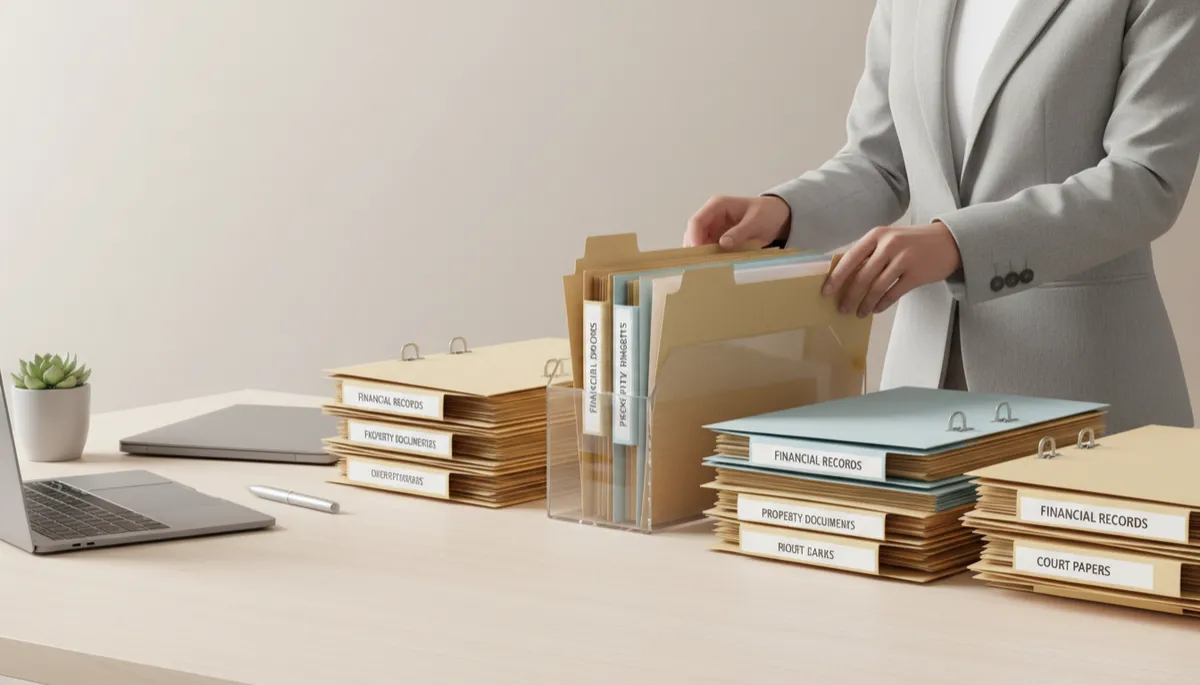
A simple filing system can save hours when preparing Florida divorce forms.
Children’s Information: When Minor Children Are Involved
If you and your spouse have minor children together, you will need additional information to complete parenting and child‑related forms. Again, this section focuses on administrative details, not on how timesharing or support should be decided. For each child, gather:
Full legal name and date of birth.
Current address and the person(s) the child lives with now.
A list of addresses where the child has lived for the past five years (or since birth if younger than five), and with whom they lived at each address.
You may also be asked about any prior or current cases involving the children, such as child support, paternity, or dependency actions. Having case numbers and court locations ready helps your document preparer fill out the required disclosures accurately, which can prevent future confusion or delays in your case.
💡 Pro Tip: Create a one‑page summary for each child listing their birth details, schools attended, and address history. Bring these summaries to any meeting about your divorce paperwork.
Property and Debt Information: What You Own and What You Owe
Divorce forms often include sections for describing your assets and liabilities. While a document preparer cannot tell you how property should be divided, they can help you organize and list what exists. For thorough divorce paperwork assistance Florida, gather details about:
Common Types of Property
Real estate (homes, condos, land) – addresses, approximate value, mortgage information, and whose name is on the deed and loan.
Vehicles (cars, boats, motorcycles) – year, make, model, loan balance, and whose name is on the title and loan documents.
Bank accounts – bank name, last four digits of account numbers, and approximate balances for checking, savings, and money market accounts.
Retirement accounts – 401(k), IRA, pension, or similar accounts with current balances or recent statements.
Common Types of Debts
Mortgages and home equity loans – lender name, current balance, and monthly payment amount.
Auto loans – lender, balance, and monthly payment.
Credit cards – creditor name, last four digits of the account, and approximate balance for each card.
Personal loans, payday loans, or lines of credit – lender name and current balance.
Having this information in a simple spreadsheet or written list makes it much easier for a document preparer divorce service to enter your details into the correct sections of Florida’s financial forms. Again, the preparer can organize and type what you provide, but cannot advise you on what should happen with the property or debts.
Financial Records: Income, Expenses, and Supporting Documents
Florida divorces typically require a financial affidavit and sometimes additional disclosures. To complete these forms accurately, you will need to know your income, regular expenses, and overall financial picture. Helpful records include:
Recent pay stubs (usually the last three months) for both spouses, if available, to show current income and deductions.
Last two or three years of federal income tax returns, including W‑2s or 1099s, to help confirm yearly income and employment history.
Bank statements for checking and savings accounts, often for the last three months, to show balances and regular deposits or withdrawals.
Statements for retirement accounts, investments, and insurance policies with cash value, if applicable.
You will also need to estimate your monthly living expenses, such as housing, utilities, food, transportation, health insurance, and child‑related costs. A document preparer can help you input these numbers into the correct lines on the financial affidavit, but you are responsible for providing accurate figures and any backup documentation the court may require.
📌 Key Takeaway: Collecting financial records early can prevent last‑minute scrambling and helps ensure your financial affidavit is complete and consistent with your supporting documents.
Existing Court Information: Prior Cases and Orders
Many people beginning a Florida divorce already have other court orders in place. For example, you might have a prior child support order, a paternity judgment, or a domestic violence injunction. When preparing your divorce documents Florida, the forms usually ask whether any related cases exist and may require you to list:
The type of case (child support, paternity, domestic violence, modification, etc.).
The county and state where the case was filed.
The case number, if you have it, and the approximate year the case was filed or decided.
Bring copies of any existing court orders, judgments, or agreements with you when you meet with a document preparer. They can use the information in those documents to ensure your new forms correctly identify and reference any prior cases. However, they cannot advise you on how those orders affect your rights or what you should request in your divorce; that would be legal advice, which only an attorney can provide.
Document Preparation vs. Legal Representation: Understanding the Difference
It is important to understand what a divorce document preparation Florida service can and cannot do. This protects you and helps you choose the right kind of help for your situation. A nonlawyer document preparer focuses on administrative assistance, not legal representation.
What Document Preparers Typically Do
Provide blank court‑approved forms or direct you to where you can obtain them from the clerk or online.
Type or fill in forms using the information you provide, without changing your answers or making legal choices for you.
Help you stay organized by creating checklists and reminding you which documents you still need to gather or sign.
What Counts as Legal Representation
Advising you about your legal rights, options, or strategy (for example, telling you how property should be divided or whether you should request alimony).
Representing you in court, speaking for you before a judge, or negotiating with your spouse’s attorney on your behalf.
Interpreting what the law means in your specific situation or predicting how a judge will rule.
Only a licensed Florida attorney can provide legal representation and legal advice. A document preparer can support you with clerical and organizational tasks, but you remain responsible for understanding the legal consequences of your decisions. If you have questions about your rights or what you should ask for in your divorce, you should consult with an attorney.
⚠️ Warning: Document preparation services are not a substitute for legal advice. If your case involves complex property, domestic violence, or contested child issues, speaking with a lawyer is especially important.
Practical Tips for Staying Organized Throughout the Process
Once you know what information you need, the next step is keeping it organized. This can make your work with a divorce paperwork assistance Florida service more efficient and less overwhelming. Consider these simple strategies:
Use a dedicated folder or binder labeled “Divorce Documents” with sections for identification, marriage, addresses, children, property, debts, finances, and court orders.
Create digital backups of important documents by scanning or securely photographing them, and store them in a password‑protected folder or cloud account.
Keep a running checklist of what you have already gathered and what is still missing so you can track your progress at a glance.
Organization will not change the emotional side of divorce, but it can give you a sense of control over the paperwork side. Many people find that once their documents are in order, they feel less anxious about the steps ahead.
Frequently Asked Questions About Florida Divorce Document Preparation
1. Do I need all of this information before I talk to a document preparer?
Not necessarily. It is helpful to gather as much as you can ahead of time, but many people start with partial information and then fill in the gaps. A document preparer can give you a checklist of what is still needed and help you prioritize which records to locate first. The more prepared you are, the fewer follow‑up appointments or revisions you will need.
2. What if I do not know my spouse’s address or financial information?
Many people do not have complete information about their spouse, especially if they have been separated for some time. You should still provide as much detail as you reasonably can. A document preparer can enter “unknown” where appropriate based on your instructions, but cannot tell you whether that is sufficient for your case. If you are unsure how missing information might affect service of process or your rights, a consultation with a Florida attorney is recommended.
3. Can a document preparer tell me which forms to file or which boxes to check?
A nonlawyer document preparer can usually show you the forms commonly used for different types of cases and can type information that you choose to include. However, selecting which forms to file, which boxes to check, or what to request from the court may be considered legal advice. For those decisions, only a licensed attorney can properly advise you. If you are unsure, ask an attorney before completing or filing your forms.
4. How long does divorce document preparation usually take in Florida?
Time frames vary. If your case is relatively simple, and you already have your identification, financial records, and property information organized, the paperwork itself may be prepared in a matter of days. More complex cases, or situations where documents are missing or incomplete, can take longer. Being organized and responsive when your preparer asks for additional information can significantly speed up the process.
5. Do I still need a lawyer if I use a document preparation service?
That decision is entirely up to you. Some people choose to handle an uncontested divorce on their own with the help of a document preparer. Others prefer to consult with a lawyer for advice, even if they also use a preparer for clerical tasks. If your case involves significant assets, disagreements about children, or safety concerns, many people feel more comfortable having legal representation in addition to any administrative support.
Ready to Get Organized? Call for Divorce Paperwork Assistance in Florida
Gathering the right information is the foundation of effective divorce document preparation Florida. By organizing your identification, marriage details, address history, children’s information, property and debt lists, financial records, and any existing court orders, you can make the paperwork side of divorce more manageable and less overwhelming.
If you are ready to take the next step and want help preparing your forms, you can explore professional divorce paperwork assistance Florida tailored to your situation. For more information about document preparation services and to discuss your administrative needs, call 866-977-5774 for a consultation. Speaking with a knowledgeable professional about the paperwork process can help you move forward with greater confidence and clarity.